WhatsApp Service Message Pricing (v19.24.2) – Spoki Guide
Content
Are you a marketing manager, business owner, or e-commerce operator relying on WhatsApp Business for seamless customer communication? If so, understanding the latest changes to WhatsApp Service Message Pricing is crucial for optimizing your budget and maintaining efficient customer engagement. Meta, the parent company of WhatsApp, is introducing significant adjustments to its pricing model, which will impact how businesses manage their customer interactions from October 1, 2026. These changes specifically target replies sent within the 24-hour customer service window, traditionally considered ‘free’.
This shift means that while each WhatsApp number will still benefit from 1,000 free service messages monthly, any messages exceeding this quota will incur charges at standard utility message rates. For businesses leveraging the power of WhatsApp automation through platforms like Spoki, staying informed about these updates is essential to avoid unexpected costs and ensure uninterrupted service. This comprehensive guide will break down the new pricing structure, offer practical strategies for cost management, and highlight how Spoki can help you navigate these changes effectively.
Understanding the New WhatsApp Service Message Pricing Structure
Effective October 1, 2026, Meta will begin charging for service messages. These are the free replies you send to customers within 24 hours of their last message. Previously, these interactions were entirely free, providing a cost-effective way for businesses to offer real-time support and engagement. The new policy introduces a more structured approach to these conversations.
The 1,000 Free Service Messages Monthly
A key component of the new pricing model is the allocation of 1,000 free service messages per WhatsApp number each month. This means that for the first 1,000 replies sent within the 24-hour window, businesses will not incur any charges. This free tier is designed to support smaller businesses or those with lower volumes of customer interactions, allowing them to continue offering responsive support without immediate cost implications.
Beyond the Free Tier: Utility Message Rates Apply
Once a WhatsApp number exhausts its monthly allocation of 1,000 free service messages, subsequent service messages sent within the 24-hour window will be charged at the same rate as a utility message in the recipient’s country. Utility messages are typically transactional or informational messages initiated by the business, such as order confirmations, shipping updates, or appointment reminders. The cost of these messages varies significantly by country, making it imperative for businesses to understand the specific rates applicable to their customer base.
Monitoring Your Free Message Usage with Spoki
Spoki provides robust tools to help you monitor your WhatsApp service message usage and manage costs effectively. You can easily track how many free service messages each of your WhatsApp numbers has remaining. This information is accessible in the Channels → WhatsApp section, both in the numbers list and within each number’s detailed view.
Furthermore, Spoki’s Analytics feature offers proactive warnings, notifying you when a number’s free service message usage drops below 10%. This early alert system allows you to take timely action, such as adjusting your communication strategy or considering an upgrade to a plan that better suits your volume.
Updated Price List and Country-Specific Rates
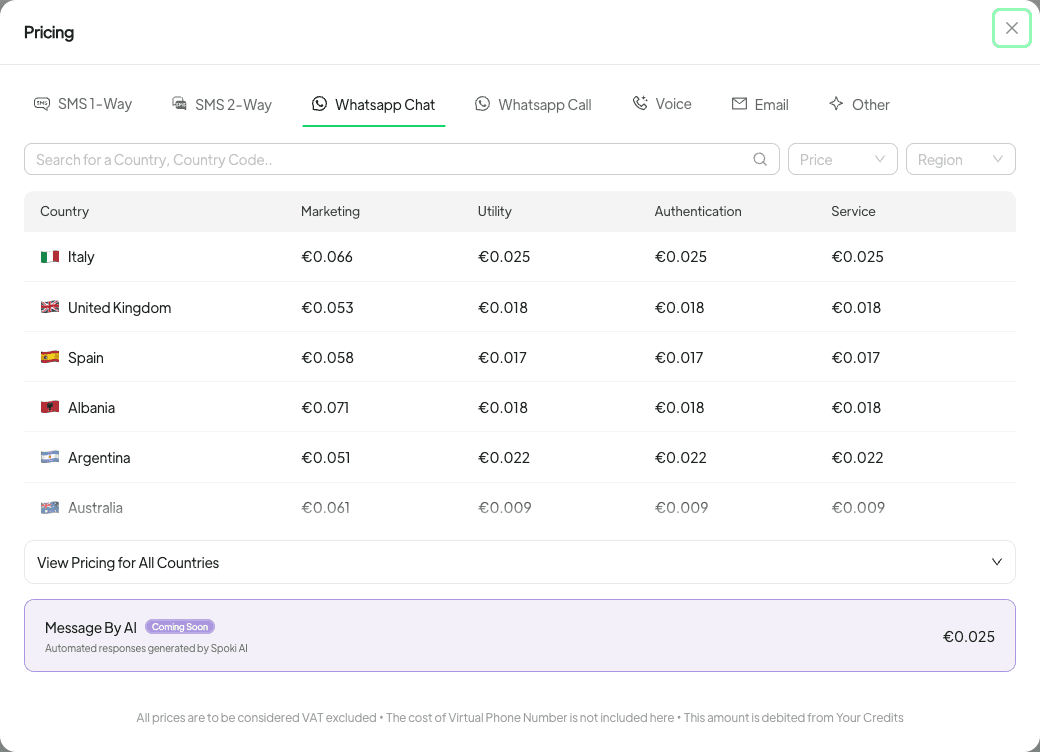
Meta has also updated its price list to include the service message price for every country. Notably, several countries now have their own specific prices, including Bangladesh, Iraq, Kazakhstan, Kuwait, Morocco, Nepal, Oman, Sri Lanka, and Ukraine. Businesses operating in or targeting these regions must consult the updated price list to accurately forecast their WhatsApp communication costs.
Practical Implications for Businesses
The new pricing model necessitates a strategic re-evaluation of how businesses utilize WhatsApp for customer service and engagement. Here’s what you need to consider:
Impact on Free Plan Users
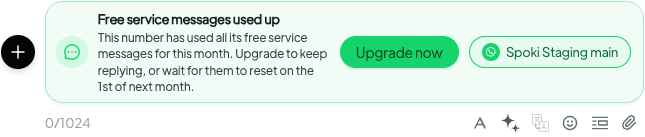
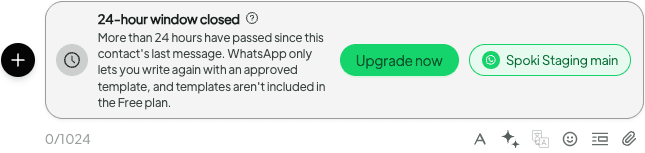
For businesses on the Free plan, the implications are particularly significant. If a number on the Free plan exhausts all its free service messages, it will be unable to reply to customers until the next month or until the plan is upgraded. This can lead to disruptions in customer service and potentially impact customer satisfaction. It’s also important to remember that templates are not included in the Free plan, which further limits proactive communication capabilities.
Budgeting and Cost Management
Businesses must now incorporate WhatsApp service message costs into their operational budgets. This involves:
- Forecasting Usage: Analyze historical data to estimate your monthly service message volume.
- Understanding Country-Specific Rates: If you serve an international customer base, familiarize yourself with the varying utility message rates across different countries.
- Monitoring in Real-Time: Utilize Spoki’s monitoring tools to keep a close eye on your message consumption and avoid unexpected charges.
Optimizing Your Communication Strategy
With costs now associated with service messages, optimizing your communication strategy becomes paramount. This includes:
- Prioritizing High-Value Interactions: Focus your human agent replies on complex queries that require personalized attention.
- Leveraging Automation for Efficiency: Implement chatbots and automated responses for frequently asked questions (FAQs) and routine inquiries to conserve free messages.
- Encouraging Self-Service: Direct customers to your knowledge base or FAQ section for simple issues, reducing the need for direct replies.
Leveraging WhatsApp Automation with Spoki to Manage Costs
WhatsApp automation, particularly through the WhatsApp Business API and intelligent chatbots, offers a powerful solution for businesses to navigate these new pricing changes efficiently. Spoki is designed to help you maximize your 1,000 free service messages and minimize costs by streamlining your customer communication.
WhatsApp Business API: The Foundation for Smart Automation
The WhatsApp Business API Documentation is the backbone of advanced WhatsApp communication, enabling businesses to integrate WhatsApp into their existing systems and automate a wide range of interactions. Spoki leverages this API to provide a robust platform for managing your WhatsApp presence. By using the API, you gain access to features like:
- Scalable Messaging: Handle high volumes of messages without manual intervention.
- Automated Workflows: Set up rules and triggers for specific customer actions.
- Integration Capabilities: Connect WhatsApp with your CRM, e-commerce platform, and other business tools.
Chatbots: Your First Line of Defense Against Costs
Chatbots are invaluable for managing the new pricing structure. By deploying intelligent chatbots through Spoki, businesses can:
- Handle FAQs Automatically: Answer common questions instantly without consuming free service messages or requiring human intervention. This frees up your agents to focus on more complex issues.
- Qualify Leads: Use chatbots to gather essential information from new inquiries, ensuring that human agents only engage with qualified leads.
- Provide Instant Support 24/7: Offer around-the-clock support, improving customer satisfaction and reducing response times, all while keeping costs in check.
Automated Messaging for Proactive Communication
Beyond chatbots, Spoki enables various forms of automated messaging that can be strategically employed to manage costs:
- Template Messages: For communications outside the 24-hour window, or for proactive outreach, template messages (formerly known as Highly Structured Messages or HSMs) are essential. These pre-approved messages are ideal for notifications, updates, and marketing campaigns. While they have their own pricing structure, they allow you to initiate conversations without consuming your service message quota.
- CRM Integration: Integrating WhatsApp with your CRM system through Spoki allows for personalized, automated communication based on customer data. For instance, you can automatically send order updates, shipping notifications, or appointment reminders, all managed efficiently to optimize your message usage.
Strategies for Minimizing Service Message Consumption
Here are some actionable strategies to help you stay within your 1,000 free service messages or minimize costs when exceeding them:
- Enhance Your Chatbot’s Knowledge Base: Continuously update your chatbot’s responses to cover a wider range of customer queries. The more questions your chatbot can answer, the fewer human replies are needed.
- Implement Interactive Voice Response (IVR) Integration: For complex issues that require human intervention, consider integrating WhatsApp with an IVR system to route customers to the most appropriate agent or department efficiently.
- Educate Your Customers: Inform your customers about the fastest ways to get answers, such as checking your FAQ page or using specific keywords with your chatbot.
- Segment Your Audience: Use Spoki’s segmentation tools to tailor your communication. Send targeted messages to specific customer groups, ensuring relevance and reducing unnecessary interactions.
- Analyze Performance with Spoki Analytics: Regularly review your WhatsApp message analytics within Spoki. Identify peak times for customer inquiries, common questions, and areas where automation can be further optimized. This data-driven approach helps refine your strategy and reduce costs.
Real-World Use Cases for Spoki Automation
Let’s explore how various businesses can leverage Spoki’s WhatsApp automation features to adapt to the new pricing model:
E-commerce Businesses
- Automated Order Updates: Send automated order confirmations, shipping notifications, and delivery updates using template messages. This keeps customers informed proactively and reduces inbound queries that might otherwise require a service message reply.
- Abandoned Cart Recovery: Set up automated messages to remind customers about abandoned carts. If a customer replies with a question, a chatbot can handle simple queries, or a human agent can step in for personalized assistance, carefully managing the 24-hour window.
- Customer Support Chatbots: Deploy a chatbot to handle common questions about returns, refunds, or product information. This ensures quick responses and minimizes the use of free service messages for routine tasks.
Service-Based Businesses (e.g., Salons, Clinics, Consultancies)
- Appointment Reminders: Use automated template messages to send appointment confirmations and reminders.
- FAQ Automation: A chatbot can answer questions about services, opening hours, or booking procedures, reducing the need for direct replies.
- Feedback Collection: Automate post-service feedback requests, which can be sent as template messages, encouraging engagement without consuming service messages unless a specific query arises.
Retail Businesses
- Stock Availability Inquiries: A chatbot can quickly check stock levels and provide information, preventing human agents from using service messages for simple lookups.
- Promotional Campaigns: Use targeted template messages for promotions and new product launches, driving traffic and engagement. Any replies can be handled by a chatbot first.
Educational Institutions
- Admissions Inquiries: A chatbot can answer common questions from prospective students about courses, application processes, and deadlines.
- Student Support: Automate responses to FAQs regarding schedules, fees, or campus facilities, ensuring students get quick answers while optimizing message usage.
Conclusion: Adapting and Thriving with Spoki
The upcoming changes to WhatsApp Service Message Pricing from October 1, 2026, mark a significant shift in how businesses manage their customer communications on the platform. While the introduction of charges for replies within the 24-hour window might seem daunting, it also presents an opportunity to refine your strategies, embrace automation, and optimize your budget.
Spoki empowers businesses to navigate these changes seamlessly. By providing robust tools for monitoring usage, deploying intelligent chatbots, and enabling strategic automated messaging, Spoki helps you maximize your 1,000 free service messages monthly and manage costs effectively when exceeding that threshold. Whether you’re an e-commerce operator, a marketing manager, or an SMB owner, Spoki offers the practical solutions you need to maintain exceptional customer engagement while adhering to the new pricing structure.
Don’t let these changes disrupt your customer service. Adapt, optimize, and continue to thrive on WhatsApp.
Start for free with Spoki — no credit card required.