Content
Spoki vs. Respond.io: Maximizing E-commerce Sales with WhatsApp Automation
In the hyper-competitive world of e-commerce, capturing customer attention is no longer just about having the best product—it is about timing and channel selection. With email open rates hovering around 20% and social media organic reach plummeting, digital strategists and marketing managers are migrating toward a channel that offers unparalleled engagement: WhatsApp. However, leveraging WhatsApp for business requires robust tools, leading many to compare Spoki vs. Respond.io.
Both platforms utilize the WhatsApp Business API to scale communications, but they serve fundamentally different primary purposes. Choosing the wrong tool for your specific goals—whether it’s customer support ticketing or proactive sales automation—can lead to wasted budget and missed revenue opportunities.
In this comprehensive guide, we will dissect the differences between Spoki and Respond.io, specifically through the lens of maximizing e-commerce sales, automating customer journeys, and driving ROI.
The WhatsApp Business API Landscape
Before diving into the direct comparison, it is crucial to understand the foundation both platforms are built upon: the WhatsApp Business API. Unlike the standard WhatsApp app on your phone, the API is designed for medium to large businesses requiring automation, multiple users, and integration with external software (CRMs, ERPs, E-commerce platforms).
The API allows for:
- Template Messages: Pre-approved notifications for shipping updates, OTPs, and marketing offers.
- Green Tick Verification: Establishing brand authenticity.
- Automation: Chatbots and automated flows that operate 24/7.
While Respond.io and Spoki both provide access to these API features, their approach to how you use them defines their value proposition.
Core Philosophy: Omnichannel Support vs. Vertical Automation
Respond.io: The Conversation Hub
Respond.io positions itself primarily as a customer conversation management software. Its greatest strength lies in its omnichannel capability. It aggregates messages from WhatsApp, Facebook Messenger, Instagram, Telegram, WeChat, and Line into a single inbox.
For support teams dealing with a deluge of inbound tickets across five different social platforms, this is incredibly useful. It excels at assigning conversations to agents and ensuring no ticket goes unanswered.
Spoki: The Marketing & Sales Engine
Spoki takes a specialized approach. While it handles customer support effectively, its core DNA is Marketing Automation and Sales Acceleration specifically tailored for the WhatsApp ecosystem. Spoki is designed to proactively drive revenue, not just reactively answer questions.
For an e-commerce manager, the goal is often to initiate the conversation (e.g., “You left this in your cart”) rather than waiting for the customer to ask a question. Spoki’s architecture is built to integrate deeply with marketing funnels, turning WhatsApp into a performance channel similar to email automation, but with 98% open rates.
Deep Dive: Features That Drive E-commerce Sales
When evaluating Spoki vs. Respond.io for online retail, the nuances in automation capabilities make a significant difference in conversion rates.
1. The Automation Builder
Respond.io offers a workflow builder that is effective for routing chats. For example, if a user types “Support,” route to Agent A; if “Sales,” route to Agent B. It focuses on the internal movement of the ticket.
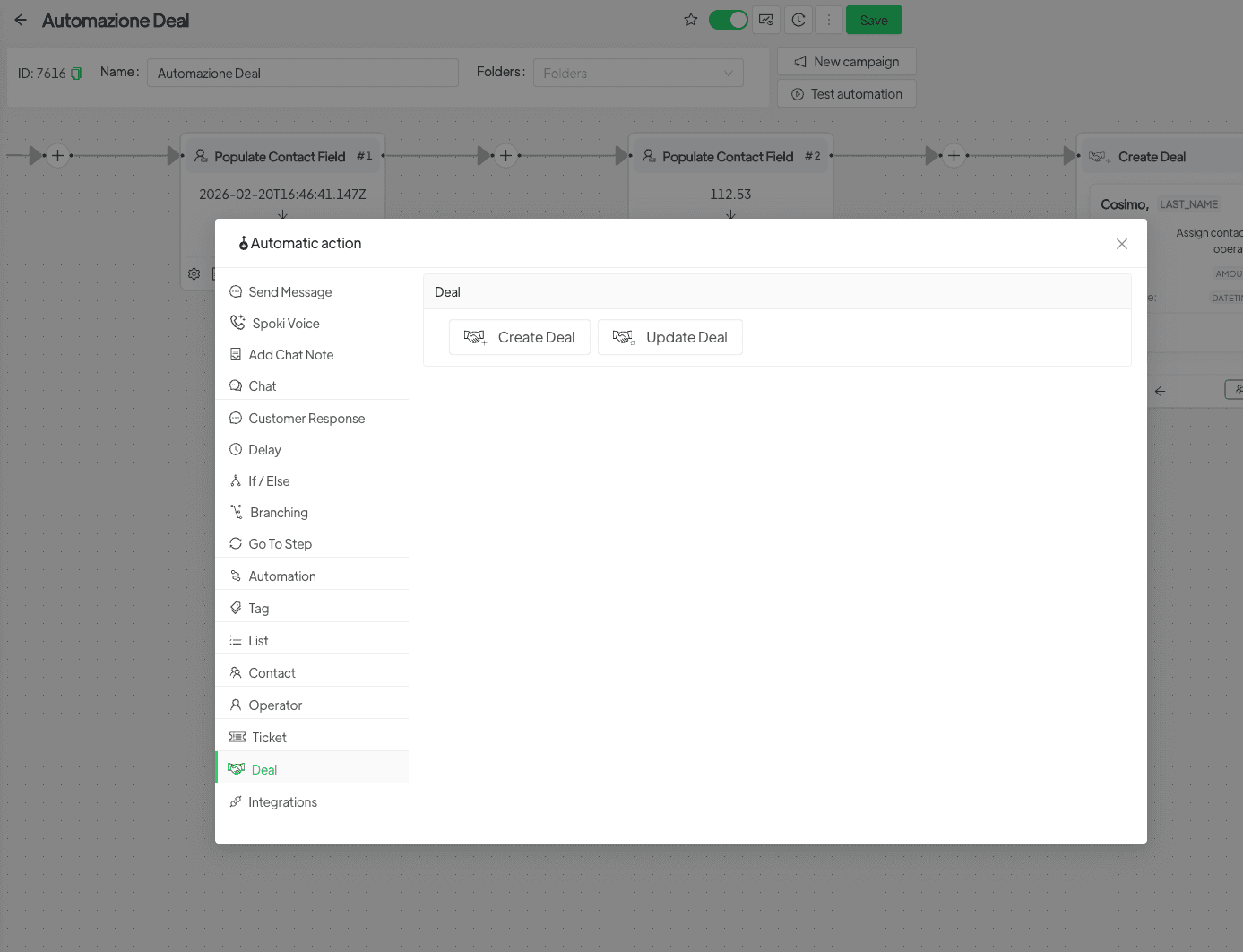
Spoki offers a visual automation builder designed for the Customer Journey. You can build complex flows based on user behavior:
- Trigger: User abandons cart in Shopify/WooCommerce.
- Action: Wait 1 hour.
- Action: Send WhatsApp message with a dynamic link to the cart.
- Condition: If the user clicks but doesn’t buy, send a 5% discount code 24 hours later.
This level of behavioral targeting is what shifts the needle from “support” to “sales generation.”
2. E-commerce Platform Integration (Shopify, WooCommerce, Magento)
Integration is the backbone of automation. If your WhatsApp tool doesn’t talk to your store, you are stuck manually exporting CSV files.
Respond.io integrates with e-commerce platforms primarily to pull customer data into the chat window so an agent can see the order history while chatting. This is excellent for context but requires a human agent to be present.
Spoki integrates to trigger actions. Spoki creates a direct bridge where store events (New Order, Order Completed, Shipment Tracking, Abandoned Checkout) automatically fire specific WhatsApp templates without human intervention. This capability allows e-commerce businesses to scale their communication without scaling their support staff proportionally.
3. Marketing Campaign Management
Sending a newsletter via WhatsApp (Broadcasting) is a powerful tool. However, strict WhatsApp policies prohibit spam. Compliance is key.
Spoki provides granular control over broadcast campaigns with detailed analytics on Delivery Rates, Read Rates, and Click-Through Rates (CTR). Furthermore, Spoki allows for dynamic variable insertion (e.g., “Hi [Name], your item [Product] is back in stock”) at scale, ensuring high personalization which protects your sender reputation.
Strategic Use Cases for E-commerce
To truly understand the impact of choosing Spoki vs. Respond.io, let’s look at three specific implementation strategies that drive revenue.
Use Case A: The Abandoned Cart Recovery
The Problem: Average e-commerce cart abandonment rates are nearly 70%. Email reminders often land in the promotions tab.
The Spoki Solution:
Spoki detects the abandoned cart event via its WooCommerce or Shopify plugin. It automatically sends a WhatsApp message 45 minutes later: “Hi Sarah, we saved your cart for you! Stocks are low, would you like to complete your order? [Link]”.
The Result: WhatsApp reminders typically see conversion rates 3x to 5x higher than email equivalents. Because Spoki focuses on the transaction trigger, this runs on autopilot.
Use Case B: Post-Purchase Upsell
The Problem: The most expensive part of e-commerce is acquiring the customer. Increasing Lifetime Value (LTV) is essential for profitability.
The Spoki Solution:
A customer buys a coffee machine. Spoki triggers a flow that waits 14 days (estimated time for the customer to receive and use the product). It then sends a message: “Hi John, loving your morning brew? We have a special offer on coffee bean subscriptions just for you. Reply ‘BEANS’ to see it.”
The Result: High-engagement interaction that feels like service but functions as sales.
Use Case C: Lead Qualification via Chatbots
The Problem: B2B e-commerce or high-ticket items (like furniture) often require questions before purchase.
The Spoki Solution:
You create a “Click-to-WhatsApp” ad on Facebook. When the user clicks, a Spoki chatbot activates. It asks three qualifying questions (Budget, Timeline, Style). Based on the answers, it either sends an automated catalog or assigns the lead to a high-priority sales agent in your CRM.
Pricing and Accessibility
When comparing Spoki vs. Respond.io, pricing structures reflect their target users.
Respond.io utilizes a monthly active contact (MAC) pricing model. As your list grows—even if you aren’t messaging them all constantly—your costs may increase. It is optimized for teams that need multi-agent access.
Spoki offers a structure that aligns closely with usage and conversation volume, making it highly scalable for businesses focused on ROI. Spoki’s pricing is transparent regarding WhatsApp’s conversation-based pricing (Utility, Marketing, Authentication, Service categories), ensuring you understand exactly where your budget goes.
Integration with Your Tech Stack
No tool exists in a vacuum. Your WhatsApp automation must talk to your CRM and marketing tools.
Spoki Integrations
Spoki shines with deep, native integrations meant for marketers:
- ActiveCampaign: Trigger WhatsApp messages from within ActiveCampaign automations.
- HubSpot: Log WhatsApp chats as activities on the contact timeline.
- WooCommerce / Shopify: Native plugins for transactional triggers.
- Zapier/Make: Connect to virtually any other tool.
Compliance and Best Practices
Whether you choose Spoki or Respond.io, adherence to WhatsApp’s Commerce Policy is non-negotiable. Both platforms are Official Business Solutions Providers (BSPs) or partner with them, ensuring you stay compliant.
Key Rules to Remember:
- Opt-In is Mandatory: You must have permission to message users. Spoki provides tools to create “opt-in links” and QR codes to gather this consent legally.
- Template Quality: Marketing templates must be approved by Meta. Spoki’s dashboard provides real-time feedback on template status.
- Unsubscribe Option: Always provide a way for users to opt-out (e.g., “Reply STOP to unsubscribe”). This improves your quality rating.
Conclusion: Which Platform is Right for You?
The decision between Spoki and Respond.io ultimately comes down to your primary business objective.
Choose Respond.io if:
- Your primary pain point is managing a high volume of inbound support tickets across many different channels (FB, Insta, Line, WhatsApp).
- You need a unified inbox for a large customer service team.
Choose Spoki if:
- Your primary goal is increasing e-commerce sales, recovering abandoned carts, and driving revenue.
- You want to automate the customer journey based on purchase behavior.
- You use tools like WooCommerce, ActiveCampaign, or HubSpot and need deep integration.
- You view WhatsApp as a proactive marketing channel rather than just a support channel.
For e-commerce businesses looking to turn conversations into conversions, Spoki offers the dedicated toolset needed to build profitable automated funnels.
Ready to transform your WhatsApp strategy from reactive support to proactive sales?