AI Receptionist vs Human Receptionist: Pros & Cons (2026)
Content
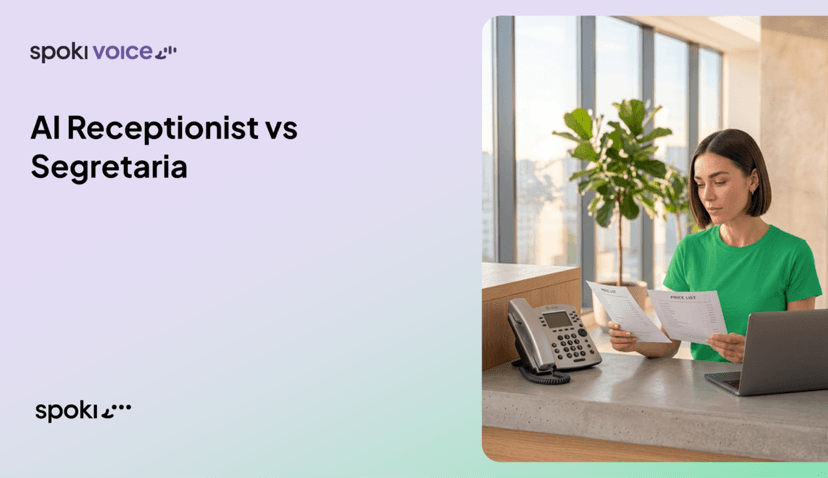
For decades, the receptionist has been the first point of contact between businesses and their customers. Whether answering phone calls, scheduling appointments, greeting visitors, or routing enquiries to the right department, receptionists have played a critical role in delivering a positive customer experience.
Today, however, businesses face a new question: should they continue relying exclusively on human receptionists, or is it time to introduce WhatsApp Marketing">artificial intelligence into customer communication?
The rise of the AI Receptionist has sparked an important debate. Some believe AI will completely replace reception staff. Others see it as nothing more than an advanced answering machine. The reality lies somewhere in between.
Modern AI Receptionists are incredibly effective at handling repetitive conversations, answering common questions, booking appointments, and managing high call volumes. Human receptionists, on the other hand, remain essential for situations that require empathy, critical thinking, negotiation, and personal relationships.
The goal isn’t choosing between AI and people. It’s understanding how each one contributes to a better customer experience.
In this guide, we’ll compare AI Receptionists and Human Receptionists across every important area — from cost and availability to customer satisfaction, scalability, and long-term business value — so you can decide which approach best fits your organization.
Table of Contents
- What Does a Receptionist Actually Do?
- What Is an AI Receptionist?
- AI Receptionist vs Human Receptionist
- Cost Comparison
- Availability
- Speed of Response
- Customer Experience
- Personalization
- Productivity
- Scalability
- Feature Comparison Table
- Which Businesses Benefit Most?
- Why AI and Humans Work Better Together
- Common Myths About AI Receptionists
- When Should You Choose a Human Receptionist?
- When Should You Choose an AI Receptionist?
- Frequently Asked Questions
What Does a Receptionist Actually Do?
Before comparing AI and human receptionists, it’s important to understand the role itself. A receptionist is responsible for much more than answering the phone — in most organizations, they create the first impression customers have of the business.
Typical responsibilities include: answering incoming calls, greeting customers, scheduling appointments, providing information, directing enquiries to the appropriate department, collecting customer details, managing calendars, and supporting administrative activities.
Every one of these tasks contributes to a smoother customer experience. However, not all of them require the same level of human expertise. Some activities are repetitive and process-driven. Others require emotional intelligence, judgment, and experience. This distinction is what makes AI Receptionists so valuable.
What Is an AI Receptionist?
An AI Receptionist is a conversational AI system capable of performing many of the same tasks traditionally handled by a human receptionist. Unlike voicemail or traditional IVR systems, AI Receptionists understand natural language and respond conversationally. They can answer questions, schedule appointments, collect customer information, qualify enquiries, and transfer conversations whenever human assistance is needed.
Modern AI Receptionists also integrate with business software such as CRM platforms, calendars, help desk systems, ERP software, workflow automation platforms, and messaging channels like WhatsApp and email. Rather than acting as a standalone phone answering service, they become part of a connected communication ecosystem.
AI Receptionist vs Human Receptionist
Choosing between an AI Receptionist and a human receptionist isn’t simply a matter of technology. It’s about understanding which tasks are better handled by automation and which still benefit from human interaction. Let’s compare them across the areas that matter most.
Availability
One of the biggest differences is availability. A human receptionist works during scheduled business hours, and takes breaks, holidays, vacations, and sick leave. When they’re unavailable, calls may go unanswered or customers may be redirected to voicemail.
An AI Receptionist never has these limitations. It answers every call instantly, 24 hours a day, seven days a week. Whether a customer calls during lunch, late at night, or on a public holiday, they receive immediate assistance.
For businesses operating across multiple time zones or serving customers outside standard office hours, this continuous availability can significantly improve customer satisfaction while reducing missed opportunities.
Cost
Hiring a receptionist involves much more than salary alone. Businesses also need to consider recruitment costs, training, employee benefits, paid leave, office space, equipment, and ongoing management. As customer demand grows, additional staff may be required.
AI Receptionists operate under a completely different model. Instead of increasing headcount, businesses expand their capacity through automation. The cost becomes predictable and scales far more efficiently as call volumes increase.
However, viewing AI purely as a cost-saving tool is a mistake. The greatest return often comes from improved productivity, faster response times, and increased customer conversion — not simply reducing payroll expenses.
Speed of Response
Customers value speed, and the data backs it up: research from MIT (the Lead Response Management study, conducted by Dr. James Oldroyd and published via InsideSales.com) found that businesses responding to a new lead within 5 minutes are 100 times more likely to make contact — and 21 times more likely to qualify that lead — than those who wait 30 minutes.
Human receptionists can only answer one call at a time. During busy periods, customers may wait in queues or abandon the call altogether. AI Receptionists answer immediately — every caller receives instant attention, regardless of how many other conversations are taking place.
For businesses that receive large volumes of enquiries, this can dramatically improve both customer experience and lead conversion rates.
Customer Experience
One of the biggest concerns businesses have when considering an AI Receptionist is customer experience. Will customers notice they’re speaking with AI? Will the conversation feel natural? Will people become frustrated?
These are valid questions. Fortunately, conversational AI has evolved dramatically in recent years. Modern AI Receptionists can understand natural language, maintain contextual conversations, and respond almost instantly using realistic voices.
For routine interactions, many customers simply care about getting a fast and accurate answer — they don’t necessarily care whether they’re speaking with a person or an AI. Examples include booking an appointment, asking about opening hours, checking an order status, requesting basic information, or confirming a reservation. These tasks benefit from speed more than human interaction.
However, customer experience isn’t only about efficiency. When conversations become emotional or complex, people still expect empathy, judgment, and flexibility. A customer calling to resolve a complaint or discuss a sensitive issue usually prefers speaking with another person. This is why the best businesses combine AI and human receptionists rather than choosing one over the other.
Personalization
A common misconception is that AI provides generic conversations. In reality, modern AI Receptionists can personalize every interaction using business data.
When integrated with CRM platforms and customer databases, the AI can recognize returning customers and adapt conversations based on previous interactions. For example, an AI Receptionist can welcome returning customers by name, retrieve previous appointments, reference existing support tickets, recognize loyalty customers, continue previous conversations, and adapt responses based on customer history.
Human receptionists can also provide personalized service, but they often rely on memory or manually searching for information. AI retrieves this information instantly — the result is faster, more consistent personalization at scale.
Productivity
Perhaps the greatest advantage of AI Receptionists is productivity. Think about how many conversations your reception team handles every day that follow exactly the same pattern: confirming opening hours, booking appointments, collecting customer details, redirecting calls, explaining standard procedures, answering frequently asked questions.
These conversations are repetitive but necessary. Every minute spent on them is a minute not spent helping customers with more complex needs. An AI Receptionist automates these repetitive interactions, allowing employees to dedicate their time to activities where human expertise creates the greatest value.
Businesses don’t simply become more efficient — employees become more productive because they focus on work that requires creativity, empathy, and problem-solving.
Scalability
Growth creates opportunity. It also creates operational pressure. As customer demand increases, businesses receive more enquiries, more appointments, and more phone calls.
For organizations relying exclusively on human receptionists, growth often means hiring additional staff. Recruitment takes time, training requires resources, and operational costs continue increasing.
AI Receptionists scale differently. Whether handling ten calls or several thousand per day, the platform continues operating without increasing headcount. This makes AI particularly valuable for businesses experiencing seasonal demand, marketing campaigns, or rapid expansion.
Instead of asking “How many receptionists do we need?”, businesses begin asking “How many conversations can we automate?” This shift fundamentally changes the economics of customer communication.
Feature Comparison Table
The following comparison highlights where each solution performs best.
| Human Receptionist | AI Receptionist | |
|---|---|---|
| Available 24/7 | No | Yes |
| Answers every call instantly | No | Yes |
| Handles multiple conversations simultaneously | No | Yes |
| Natural empathy | Yes | Limited |
| Emotional intelligence | Yes | Limited |
| Appointment booking | Yes | Yes |
| FAQ handling | Yes | Yes |
| CRM updates | Manual | Automatic |
| Workflow automation | No | Yes |
| WhatsApp follow-up | No | Yes |
| Email & SMS automation | No | Yes |
| Reporting & analytics | Limited | Advanced |
| Scalability | Limited | Excellent |
| Operational consistency | Variable | Consistent |
| Cost predictability | Lower | Higher |
No single column wins every category. Each option has strengths. The key is understanding where each one creates the greatest value.
Which Businesses Benefit Most from AI Receptionists?
Almost every organization that receives inbound phone calls can benefit from AI-powered reception. However, some industries see particularly strong results.
Healthcare — medical practices and dental clinics automate appointment booking, cancellations, reminders, and frequently asked questions, allowing reception staff to focus on patient care.
Automotive — car dealerships and repair centers use AI Receptionists to schedule test drives, organize maintenance appointments, answer vehicle availability questions, and qualify new sales enquiries.
Professional services — law firms, accounting firms, consultants, and agencies reduce administrative work by allowing AI to qualify new clients and schedule consultations automatically.
Hospitality — hotels and travel businesses improve guest experiences by answering reservation enquiries, confirming bookings, and assisting customers at any time of day.
Retail — retailers automate questions about products, opening hours, returns, deliveries, and order status, reducing pressure on in-store employees.
Why AI and Humans Work Better Together
Many discussions around artificial intelligence focus on replacement. Will AI replace receptionists? Should companies eliminate front-desk staff? These questions miss the real opportunity.
The highest-performing businesses aren’t replacing people — they’re redesigning how work gets done. Artificial intelligence excels at speed, consistency, availability, automation, and repetitive conversations. Humans excel at empathy, creativity, negotiation, building relationships, and solving complex problems.
Instead of competing, they complement each other. AI handles routine interactions; people handle meaningful ones. This creates a better experience for customers while making employees more productive and engaged.
The future of customer communication isn’t AI versus humans. It’s AI working alongside humans.
Common Myths About AI Receptionists
As AI becomes more common in business communication, several misconceptions continue to influence buying decisions. Let’s address the most common ones.
Myth #1 — “AI will replace human receptionists.” This is probably the biggest misconception. The objective of an AI Receptionist isn’t to replace people — it’s to eliminate repetitive work. When AI handles routine conversations, receptionists gain more time to focus on customers who genuinely need personal attention. The result is a better experience for both customers and employees.
Myth #2 — “Customers don’t want to talk to AI.” Most customers don’t mind speaking with AI, as long as the experience is fast, helpful, and natural. When someone wants to book an appointment, ask for business hours, check an order, or reach the right department, their priority isn’t whether they’re talking to AI — it’s getting an immediate answer. Problems only arise when AI can’t understand requests or traps customers inside rigid conversation flows, and modern conversational AI has largely solved these issues.
Myth #3 — “AI Receptionists are only for large companies.” Not anymore. Small businesses often benefit the most: they rarely have someone available to answer every phone call throughout the day, since employees are busy serving customers, attending meetings, or working on other priorities. An AI Receptionist allows even a small business to provide enterprise-level availability without hiring additional staff.
Myth #4 — “AI is too expensive.” Many businesses compare the monthly subscription cost of an AI platform with the salary of a receptionist — that’s the wrong comparison. The real question is: how much revenue is your business losing because nobody answers the phone? Or: how many hours does your team spend every week on repetitive conversations? The ROI comes from capturing more opportunities, responding faster, reducing administrative work, improving customer satisfaction, and scaling operations without increasing headcount.
When Should You Choose a Human Receptionist?
Despite the rapid evolution of conversational AI, there are situations where human receptionists remain irreplaceable. Human interaction is particularly valuable for emotional situations, customer complaints, sensitive healthcare discussions, high-value commercial negotiations, strategic client relationships, and complex decision-making. Empathy, intuition, and emotional intelligence remain uniquely human strengths, and businesses should continue investing in people for these types of interactions.
When Should You Choose an AI Receptionist?
AI Receptionists deliver the greatest value when conversations are repetitive, process-driven, and time-sensitive. Typical examples include answering incoming calls, appointment scheduling, frequently asked questions, lead qualification, call routing, customer identification, booking confirmations, reminder calls, collecting customer information, and after-hours support. These conversations follow predictable workflows and can be automated without sacrificing customer experience.
The Best Businesses Don’t Choose Between AI and Humans
This is where many companies make the wrong decision — they believe they have to choose: either hire more receptionists, or replace everyone with AI. In reality, the most successful organizations do neither. They combine both.
Artificial intelligence handles repetitive conversations; human employees focus on conversations where their expertise creates the greatest impact. This collaboration produces better outcomes than either approach alone, with benefits including faster response times, higher customer satisfaction, better employee productivity, reduced operational workload, greater scalability, and more consistent customer experiences.
The future isn’t AI replacing people. It’s people becoming more effective because AI handles routine work.
Why Spoki Voice Goes Beyond a Traditional AI Receptionist
Many AI Receptionist platforms are designed with one objective: answer every phone call. While this is important, modern businesses require much more than intelligent call answering.
Spoki Voice transforms every conversation into an operational workflow. After each call, the platform can automatically qualify leads, update your CRM, launch workflow automations, send WhatsApp confirmations, deliver follow-up emails or SMS, schedule appointments, notify the appropriate department, or escalate conversations to human employees with the full context already collected.
The conversation doesn’t stop when the customer hangs up — it continues across your entire communication ecosystem. That’s the difference between an AI Receptionist and a modern conversational platform. At Spoki, we believe that answering the phone is only the first step. The real opportunity begins with what happens next.
Frequently Asked Questions
Is an AI Receptionist better than a human receptionist?
Neither is universally better. AI excels at repetitive, high-volume conversations, while human receptionists remain essential for complex interactions that require empathy, judgment, and relationship-building. The best approach combines both.
Can an AI Receptionist answer every phone call?
Yes. Modern AI Receptionists are available 24/7 and can answer every incoming call immediately, regardless of business hours.
Can AI Receptionists book appointments?
Absolutely. Most modern platforms integrate directly with business calendars, allowing customers to book, reschedule, or cancel appointments automatically.
Can an AI Receptionist transfer calls to employees?
Yes. Advanced AI Receptionists recognize when human intervention is required and transfer conversations together with the customer’s information and conversation summary.
Can AI Receptionists work in multiple languages?
Yes. Many enterprise platforms support dozens of languages, allowing businesses to provide consistent customer experiences across international markets.
What’s the difference between an AI Receptionist and an AI Voice Agent?
An AI Receptionist focuses primarily on managing incoming calls and front-desk activities. An AI Voice Agent goes much further by integrating conversations with CRM systems, workflow automation, reporting, outbound calls, WhatsApp, email, SMS, and customer journey orchestration. Think of the AI Receptionist as the front desk, and the AI Voice Agent as the operational engine behind your customer communication strategy.
Final Thoughts
The debate between AI Receptionists and human receptionists often starts with the wrong question. It isn’t about deciding whether technology should replace people — it’s about understanding how technology can make people more productive.
AI Receptionists provide immediate availability, automate repetitive conversations, improve response times, and reduce operational workload. Human receptionists continue to play an essential role whenever empathy, experience, and personal relationships matter most.
Businesses that combine both approaches create faster, smarter, and more scalable customer experiences. The companies that will lead the next generation of customer communication won’t replace their teams with AI — they’ll empower their teams with AI. That’s the real competitive advantage.
📘 Download the AI Receptionist Buyer’s Guide
Choosing an AI Receptionist is more than selecting a new phone system — it’s an investment in how your business communicates with customers. Download the Spoki AI Receptionist Buyer’s Guide to discover: the essential features every AI Receptionist should offer, a practical comparison checklist, common buying mistakes to avoid, questions to ask every vendor, and best practices for implementing conversational AI in your business.
Use it to evaluate every solution objectively and choose the platform that will continue delivering value as your business grows.