How to Choose the Right AI Voice Agent for Your Business
Content
The AI Voice Agent market is growing faster than ever.
Every week, new platforms promise human-like conversations, 24/7 availability, natural voices, and instant customer support. From AI receptionists to fully automated call centers, businesses now have more options than ever before.
At first glance, many of these platforms seem almost identical.
They all claim to:
Answer every phone call. Sound natural. Handle customer conversations. Reduce operational costs. Improve customer service.
But once you look beyond the marketing, the differences become significant.
Some solutions are little more than AI answering machines.
Others are complete conversational platforms capable of qualifying leads, updating your CRM, launching workflows, collaborating with human teams, and continuing conversations across multiple channels.
Choosing the wrong platform doesn’t simply mean buying the wrong software.
It can affect your customer experience, your team’s productivity, your sales performance, and ultimately your company’s growth.
In this guide, you’ll learn exactly what to evaluate before investing in an AI Voice Agent, which features truly matter, the most common mistakes companies make, and how to identify a solution that will continue delivering value as your business grows.
Table of Contents
- Why Choosing the Right AI Voice Agent Matters
- The Biggest Mistakes Buyers Make
- The 10 Questions Every Company Should Ask
- AI Voice Agent Evaluation Checklist
- Red Flags to Watch For
- Future-Proofing Your Investment
- Frequently Asked Questions
Why Choosing the Right AI Voice Agent Matters
Choosing an AI Voice Agent isn’t like buying another software subscription.
For many businesses, it becomes the first point of contact customers have with the company.
Every phone call shapes the customer experience.
A poor interaction can result in a lost lead, a frustrated customer, or a missed business opportunity.
A great interaction, on the other hand, can increase trust, improve response times, and move customers through the buying journey much faster.
That’s why selecting the right platform is about much more than voice quality.
It’s about choosing a solution that fits your business processes today while supporting your growth tomorrow.
The best AI Voice Agents don’t just answer calls.
They become an extension of your sales team, customer support department, and operational workflows.
The Biggest Mistake Companies Make
When companies start evaluating AI Voice Agents, they often focus on the wrong criteria.
Many buyers ask questions like:
Does it sound human? How much does it cost? How quickly can I set it up?
While these are important considerations, they rarely determine long-term success.
The real questions should be:
Can it integrate with my CRM? Can it automate follow-up activities? Can it qualify leads? Can it collaborate with my team? Can it continue the customer journey after the phone call?
An AI Voice Agent that simply answers calls may solve today’s problem.
A platform that automates your entire customer journey creates long-term business value.
💡 Did You Know?
Most businesses don’t replace their phone system because it stops working.
They replace it because it no longer supports the way modern customers expect to communicate.
The 10 Questions Every Buyer Should Ask
Before choosing any AI Voice Agent, make sure you can confidently answer these questions.
If the answer is “no” to several of them, you may be looking at a solution that won’t scale with your business.
1. Can It Actually Understand Conversations?
This may sound obvious, but not every AI Voice Agent truly understands natural language.
Some platforms rely heavily on predefined scripts and decision trees.
Others use advanced conversational AI capable of understanding context, intent, and follow-up questions.
Ask yourself:
Can customers speak naturally? Does the AI understand different ways of asking the same question? Can it handle interruptions? Does it remember previous parts of the conversation?
Natural conversation should feel effortless—not like navigating an automated menu.
2. Can It Integrate with Your Existing CRM?
One of the biggest mistakes businesses make is choosing an AI Voice Agent that operates in isolation.
Phone conversations generate valuable customer information.
If that information isn’t automatically synchronized with your CRM, your team still ends up performing manual work.
Look for a platform that can automatically create new contacts, update existing customer records, add conversation summaries, assign leads to sales representatives, and trigger CRM workflows through native integrations.
Every conversation should become structured business data.
3. Can It Automate Business Workflows?
Answering calls is only one part of the customer journey.
What happens after the conversation matters even more.
A modern AI Voice Agent should be able to automate actions such as:
Booking appointments. Sending confirmation emails. Launching onboarding sequences. Sending WhatsApp confirmations. Opening support tickets. Scheduling follow-up calls. Updating internal systems.
Without workflow automation, employees still spend valuable time performing repetitive administrative tasks.
4. Does It Know When to Transfer to a Human?
WhatsApp Marketing">Artificial Intelligence is incredibly effective at handling repetitive conversations.
But no AI should attempt to solve every situation.
Complex customer requests still require human expertise.
The best AI Voice Agents know exactly when to hand the conversation over.
Even more importantly, they transfer the customer together with all the context already collected.
Instead of asking customers to repeat everything, employees immediately understand:
Who the customer is. Why they’re calling. What has already been discussed. Which actions have already been completed.
A seamless human handoff dramatically improves customer satisfaction while reducing frustration for both customers and employees.
5. Can It Continue the Conversation After the Call?
This is perhaps the most overlooked question of all.
Many AI Voice platforms focus exclusively on the phone conversation.
Once the call ends, so does the automation.
Modern customer communication doesn’t work that way.
Customers move between channels all the time.
They may start with a phone call, receive a WhatsApp confirmation, continue the conversation by email, and eventually complete a purchase through a sales representative.
The best AI Voice Agents don’t simply answer calls.
They keep the customer journey moving.
This is where businesses begin transforming conversations into long-term relationships instead of isolated interactions.
6. Can It Work Across Multiple Communication Channels?
Today’s customers don’t communicate through a single channel.
A prospect may call your business to ask for information, expect a confirmation via WhatsApp, receive documents by email, and continue the conversation with your sales team the following day.
Unfortunately, many AI Voice platforms still treat the phone call as an isolated event.
Once the conversation ends, the customer journey stops.
The best AI Voice Agents work differently.
They connect every interaction into a continuous experience.
For example, after a phone conversation, the platform should be able to send a WhatsApp confirmation, deliver documents via email, send appointment reminders, notify your internal team, trigger marketing automation, and continue nurturing the lead automatically.
Customers don’t think in channels.
They think in conversations.
Your AI Voice platform should do the same.
7. Can You Customize the AI for Your Business?
No two businesses manage customer conversations in exactly the same way.
A dental clinic needs different workflows than a car dealership.
A law firm has different requirements than an ecommerce business.
That’s why flexibility matters.
Before choosing a platform, ask yourself:
Can I customize the conversation? Can I define my own workflows? Can I train the AI using company knowledge? Can I personalize greetings and responses? Can I adapt the tone of voice to my brand?
An AI Voice Agent should adapt to your business—not force your business to adapt to predefined templates.
8. Does It Provide Analytics That Actually Help You Improve?
Phone conversations contain an enormous amount of business intelligence.
Unfortunately, many companies never use it.
Instead of simply showing how many calls were answered, a modern AI Voice platform should help you understand what’s happening inside every conversation.
Look for analytics that answer questions like:
Why are customers calling? Which questions appear most frequently? Where do conversations fail? How many leads become appointments? Which workflows generate the best results? Which departments receive the most escalations?
Good analytics don’t just measure activity.
They help improve performance.
Every conversation becomes an opportunity to optimize your business.
9. Can It Scale as Your Business Grows?
The platform you choose today should still support your business two or three years from now.
Many companies start with a simple requirement:
“We just need someone to answer our phone.”
Six months later, they want much more.
They want to:
Qualify inbound leads. Automate outbound calls. Connect their CRM. Launch marketing workflows. Support multiple locations. Handle different languages. Route conversations to different teams.
If the platform cannot grow with your business, you’ll eventually have to replace it.
When evaluating an AI Voice Agent, don’t just think about today’s needs.
Think about where your business will be tomorrow.
10. Does the Vendor Understand Business Processes—or Just AI?
This is perhaps the most important question of all.
Many companies build impressive AI technology.
Far fewer understand how businesses actually operate.
A great AI Voice Agent isn’t defined only by its language model.
It’s defined by how well it fits into your sales process, customer service operations, marketing activities, and internal workflows.
Technology alone doesn’t create business value.
Business outcomes do.
Choose a vendor that understands customer journeys—not just artificial intelligence.
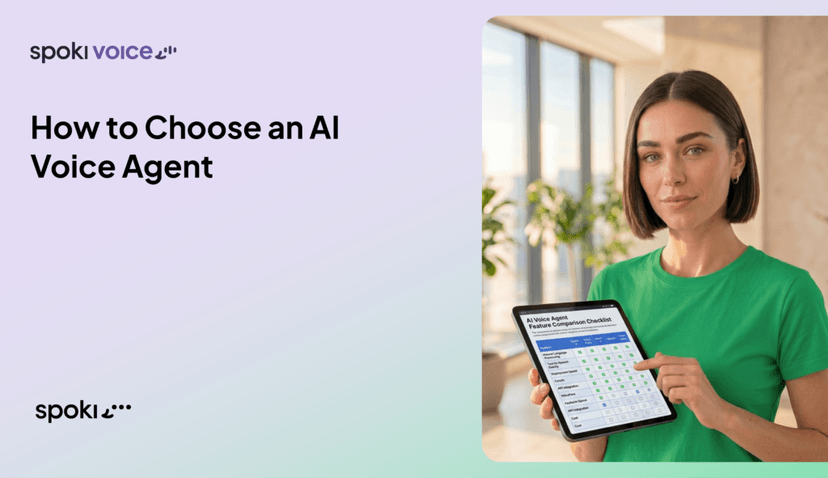
AI Voice Agent Evaluation Checklist
Before making your final decision, use this checklist.
| Evaluation Criteria | Why It Matters |
|---|---|
| Natural conversations | Creates a better customer experience |
| CRM integration | Eliminates manual data entry |
| Workflow automation | Saves time after every call |
| Human handoff | Ensures complex conversations reach the right people |
| WhatsApp, Email & SMS integration | Extends conversations beyond the phone |
| Lead qualification | Improves sales efficiency |
| Appointment booking | Automates repetitive scheduling tasks |
| Reporting & analytics | Turns conversations into business insights |
| Multi-language support | Enables international growth |
| Scalability | Protects your long-term investment |
If a platform cannot satisfy most of these requirements, it’s probably solving only part of your communication challenges.
Common Mistakes Companies Make
Choosing an AI Voice Agent is a strategic decision.
Unfortunately, many buyers evaluate platforms using the wrong criteria.
Here are the mistakes we see most often.
Choosing Based on Price Alone
The cheapest solution is rarely the most cost-effective.
Saving a few hundred euros per month means little if your team still spends hours manually updating the CRM, qualifying leads, or sending follow-up messages.
Focus on the total business value—not just the monthly subscription.
Focusing Only on Voice Quality
Natural voice matters.
But once every platform sounds realistic, voice quality stops being the differentiator.
The real question becomes:
What happens after the conversation ends?
Can the platform automate the next step?
Can it move the customer journey forward?
That’s where long-term value is created.
Ignoring Integrations
An AI Voice Agent that isn’t connected to your CRM, calendar, help desk, or automation platform creates more work instead of less.
Disconnected software leads to:
Duplicate data. Manual processes. Lost customer information. Inconsistent follow-up.
Integration isn’t an advanced feature anymore.
It’s a basic requirement.
Treating AI as a Replacement for Employees
The best implementations don’t eliminate people.
They remove repetitive work.
Employees become more productive because they spend less time answering routine questions and more time solving meaningful customer problems.
AI and humans perform best together.
Red Flags to Watch For
As you compare vendors, pay attention to warning signs that may indicate the platform isn’t ready for long-term business use.
🚩 The product only talks about “human-like voices.”
🚩 There are no CRM or workflow integrations.
🚩 There’s no human handoff.
🚩 The platform cannot automate post-call activities.
🚩 Reporting is limited to call duration and call volume.
🚩 Conversations cannot continue on other communication channels.
🚩 Customization options are extremely limited.
🚩 The platform solves only one problem instead of supporting your entire customer journey.
A truly modern AI Voice Agent should become part of your business operations—not just another communication tool.
Future-Proof Your Investment
Artificial Intelligence is evolving at an extraordinary pace.
Features that were considered innovative just one year ago—such as natural voices or 24/7 call handling—are quickly becoming standard across the industry.
If you’re choosing an AI Voice Agent today, don’t ask yourself what it can do right now.
Ask yourself what it will allow your business to do two or three years from now.
The companies gaining the biggest competitive advantage aren’t simply adopting AI.
They’re investing in platforms that can evolve with their business.
As customer expectations continue to change, your communication platform should be able to support new channels, new automations, new integrations, and entirely new customer journeys without forcing you to replace your existing technology.
Choosing a scalable platform today means avoiding expensive migrations tomorrow.
The Future Isn’t Voice AI. It’s Conversation Automation.
Many vendors still position their products as AI receptionists or intelligent phone assistants.
While this solves an important problem, it’s only one part of a much larger transformation.
The future isn’t about automating phone calls.
It’s about automating conversations.
Customers don’t think in channels.
A customer might:
Discover your company through Google. Submit a contact form. Receive an immediate phone call. Confirm an appointment via WhatsApp. Receive documents by email. Continue the conversation with a sales representative. Contact customer support weeks later.
From the customer’s perspective, it’s one continuous conversation.
Unfortunately, many businesses still manage each interaction using disconnected tools.
Phone calls stay inside the phone system.
Emails remain inside the inbox.
WhatsApp conversations live in another platform.
CRM updates depend on employees remembering to enter information manually.
This creates friction, delays, and inconsistent customer experiences.
Modern AI Voice platforms should eliminate these gaps by connecting every interaction into one continuous customer journey.
That’s where the next generation of conversational AI is heading.
Why Conversation Continuity Matters
Answering the phone is no longer enough.
The real value begins after the conversation.
Imagine a potential customer calling your business after clicking on a Google Ads campaign.
A modern conversational platform should be able to:
Answer the call immediately. Understand the customer’s needs. Qualify the opportunity. Schedule a meeting. Update the CRM automatically. Notify the assigned sales representative. Send a WhatsApp confirmation. Trigger follow-up automations. Continue nurturing the relationship after the call.
Nothing gets lost.
Nothing needs to be copied manually.
Nothing depends on someone remembering the next step.
The phone conversation simply becomes the first event inside a larger customer journey.
This is what we call conversation continuity.
It’s the difference between answering calls and building relationships.
Why Spoki Voice Takes a Different Approach
Many AI Voice solutions focus on replacing the receptionist.
Spoki Voice was built around a different idea.
Every conversation should move the customer forward.
Instead of acting as a standalone AI answering service, Spoki Voice becomes part of your company’s communication ecosystem.
Every interaction can automatically connect with your existing business processes.
After each conversation, Spoki Voice can:
Qualify new leads. Update your CRM. Launch automated workflows. Send WhatsApp confirmations. Deliver emails or SMS messages. Schedule appointments. Route conversations to the appropriate department. Escalate complex requests to human agents with complete context.
The result isn’t simply faster phone support.
It’s a connected customer journey where every conversation contributes to better customer experiences, improved operational efficiency, and measurable business growth. See how this works in practice in our Accademia OMS case study, where WhatsApp automation combined with voice AI drove measurable ROI.
That’s the difference between an AI that answers calls and a platform that helps your business operate more intelligently.
Frequently Asked Questions
How do I know if my business is ready for an AI Voice Agent?
If your team regularly misses calls, spends hours answering repetitive questions, manually updates CRM records, or struggles to follow up with every lead, you’re likely ready to benefit from conversational AI.
Should small businesses invest in AI Voice Agents?
Absolutely.
Small businesses often gain the greatest advantage because they have fewer people available to answer every incoming call.
An AI Voice Agent allows them to provide enterprise-level responsiveness without significantly increasing operational costs.
Is voice quality the most important feature?
Natural conversations are essential, but they’re no longer enough.
The most valuable platforms combine conversational AI with CRM integrations, workflow automation, customer journey orchestration, analytics, and human collaboration.
Business outcomes matter far more than voice quality alone.
Can AI Voice Agents work with existing software?
Yes.
Most enterprise-ready platforms integrate with CRM systems, calendars, ERP software, help desk platforms, email providers, messaging applications, and workflow automation tools.
The broader the ecosystem, the greater the business value.
How long does implementation usually take?
It depends on the complexity of your business processes.
Simple deployments can be completed in a matter of hours or days.
More advanced implementations involving CRM integrations, custom workflows, and multiple departments may require additional planning to ensure every conversation follows the correct business logic.
Will AI replace my customer service team?
No.
The purpose of AI Voice Agents is to automate repetitive interactions while allowing employees to focus on complex conversations, relationship building, and high-value customer interactions.
The most successful organizations combine artificial intelligence with human expertise.
Final Thoughts
Choosing an AI Voice Agent isn’t simply a technology decision.
It’s a business strategy decision.
The right platform can help your company respond faster, capture more opportunities, reduce operational workload, improve customer satisfaction, and create scalable communication processes.
The wrong platform may answer calls—but leave your team manually completing every task that follows.
As AI continues to reshape customer communication, businesses should evaluate solutions based on one simple question:
Does this platform simply answer phone calls—or does it help my business move every customer conversation forward?
That distinction will define the next generation of customer communication.
📋 Download the AI Voice Agent Buyer’s Checklist
Choosing an AI Voice Agent is a long-term investment.
Before making your decision, download the AI Voice Agent Buyer’s Checklist and evaluate every platform using the criteria that truly matter.
Inside the checklist you’ll discover:
The 20 most important evaluation criteria. Questions every vendor should be able to answer. Common red flags to avoid. A practical scoring system to compare different platforms objectively. A framework to identify the solution that best fits your business today—and as it grows.
Download it for free and make your next technology investment with confidence.
📞 Or Experience Spoki Voice in Action
Reading about AI Voice Agents is useful.
Experiencing one is even better.
Request a live call with Spoki Voice and see how an AI Voice Agent can answer calls, qualify leads, update your CRM, trigger workflows, and continue every customer conversation across WhatsApp, email, and SMS.
Because the future of customer communication isn’t just answering the phone.
It’s building conversations that never lose momentum.